
05 Jun Large Scale Solar Projects Africa: Trends & Opportunities
Decision‑makers in Africa’s power sector are seeing a rapid rise in large scale solar projects Africa, driven by falling panel costs, ambitious climate targets, and growing demand for reliable electricity. This guide highlights the most important market trends, financing options, and EPC considerations so you can evaluate whether a utility‑scale or C&I solar investment fits your portfolio.

Market overview and growth drivers
The continent’s renewable energy capacity is projected to double by 2030, with solar leading the charge. Strong policy frameworks, such as Kenya’s Feed‑in‑Tariff and South Africa’s Renewable Energy Independent Power Producer Procurement Programme, create a predictable environment for solar project development. At the same time, corporate power‑purchase agreements are pushing the C&I solar Africa market forward.
Utility‑scale solar development across African countries
Leading projects and their impact
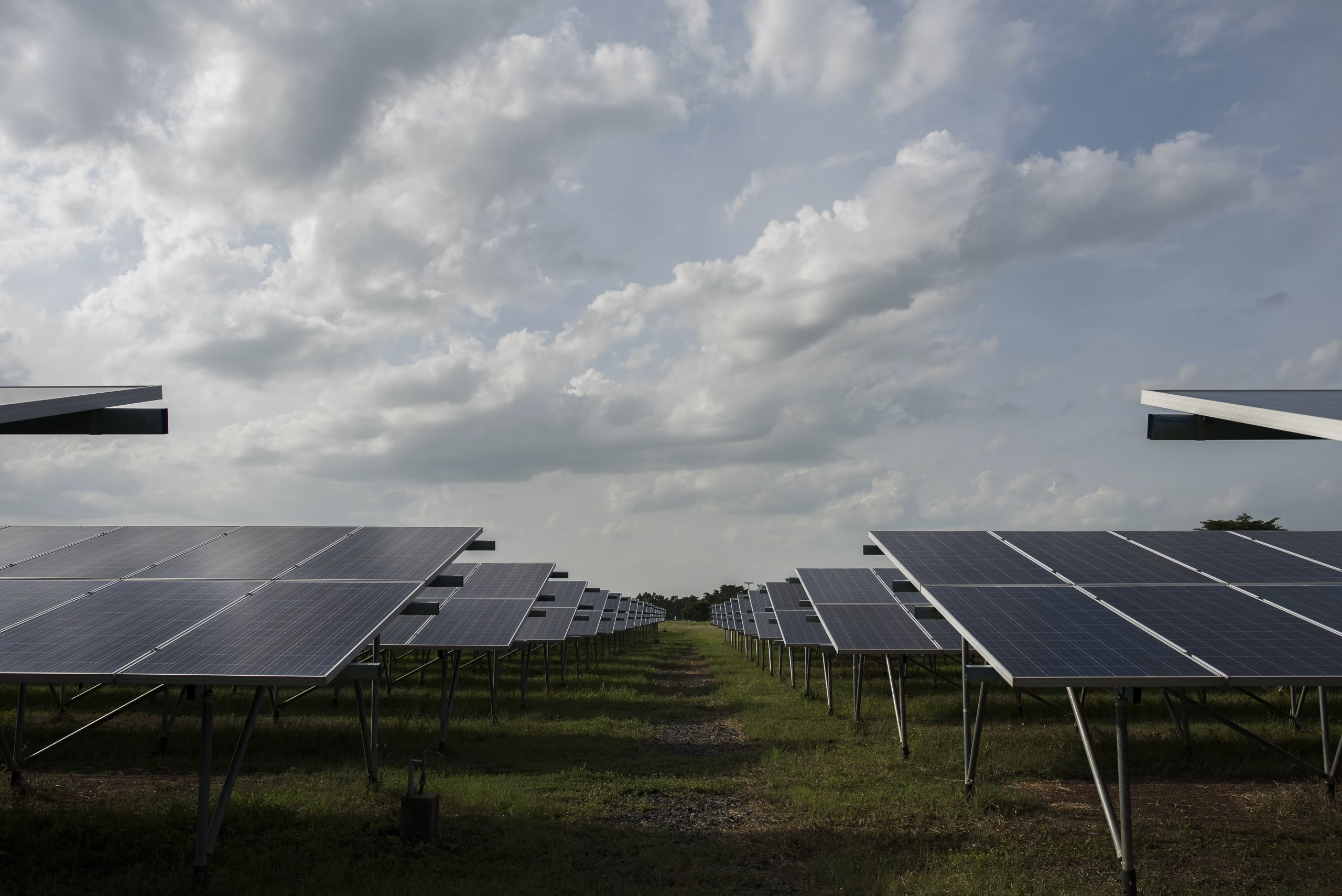
Countries like Egypt, Morocco, and South Africa have commissioned utility‑scale solar Africa farms ranging from 100 MW to over 500 MW, delivering clean power to national grids and reducing reliance on diesel generation. These projects demonstrate how large scale solar projects Africa can achieve economies of scale and attract international investors.
Grid integration challenges and solutions
Intermittency and limited transmission infrastructure remain hurdles. Innovative storage‑coupled designs and regional grid interconnectors are being deployed to smooth output and improve reliability.
Commercial & industrial (C&I) solar demand and opportunities
Sectoral drivers: manufacturing, mining, and data centers
Energy‑intensive industries are turning to C&I solar Africa to lock in stable electricity costs and meet ESG commitments. Mining operations in the DRC, manufacturing hubs in Nigeria, and data centers in Kenya are leading the way.

Case examples of C&I deployments
For instance, a major Kenyan mining company installed a 30 MW rooftop solar plant, cutting its electricity bill by 40 %. The Solar in Kenya guide provides further details on local regulatory steps.
Financing models and renewable energy investment trends
Power purchase agreements and bankable structures
PPAs remain the cornerstone of financing large scale solar projects Africa, offering predictable cash flows for lenders. Blended finance, combining commercial debt with concessional funds, is gaining traction.
Accessing green climate funds and development finance institutions
Institutions such as the African Development Bank and the Green Climate Fund provide low‑cost capital for projects that meet climate‑impact criteria. Early engagement with these bodies can improve bankability.
Solar EPC landscape and selecting partners in Africa
Key criteria for choosing an EPC contractor
Look for proven experience, local supply‑chain depth, and robust health‑and‑safety records. Our Spenomatic EPC experience across Africa showcases a track record of delivering projects on time and within budget.

Local content requirements and supply chain considerations
Many governments mandate a percentage of components to be sourced locally. Partnering with firms that understand these rules helps avoid delays.
Cost structures, ROI, and payback calculations for large‑scale projects
Capital expenditure breakdown by system components
Modules, inverters, civil works, and grid connection typically represent 60 %, 15 %, 15 %, and 10 % of total capex respectively. Detailed cost models are essential for accurate ROI forecasts.
Operating expenditure, maintenance planning, and lifecycle value
O&M contracts that include performance guarantees can reduce long‑term risk. Regular cleaning and inverter monitoring extend asset life beyond 25 years.
Risk management, regulatory compliance, and permitting
Political, currency, and contractual risk mitigation
Currency hedging, political risk insurance, and clear force‑majeure clauses protect investors from unforeseen events.
Navigating grid connection permits and environmental approvals
Early liaison with utility operators and environmental agencies streamlines the permitting timeline. Comprehensive impact assessments are now a standard requirement.
For a deeper dive into solar project economics, explore our solar articles and buyer guides. If you need tailored engineering support, review our industrial engineering solutions or contact Spenomatic Group today.
Sorry, the comment form is closed at this time.